How to sell on Amazon Japan? Guide for Singapore businesses
Learn how to sell on Amazon Japan as a Singapore business. We cover the setup process, selling fees, FBA, customs and importing, and managing payouts.


Choosing the best international payment solutions for your Singapore business can be a challenge. If you’re importing goods into Singapore, or selling services to business partners overseas, having the best modes of payment in international business makes a huge difference to profitability, admin burden and your company’s scope for growth.
This guide walks through top options to send international payments for business.
| Table of Contents |
|---|


International business payments involve transferring funds across borders between buyers and sellers in different countries.
That might be a Singapore based importer paying for goods from a supplier based in China or the US, or a Singapore provider selling consultancy services to a customer in Australia for example.
In either case, the payment choices, including costs, currencies and deadlines, are key to ensure fair, reliable payments and keep consistent cash flow.
Global business payments often flow between importers and exporters of goods and services. However, the parties involved can extend beyond the payer and recipient:
The options for international payment processing can feel unfamiliar, as arrangements are often more complex than those used for personal payment. It helps to learn the language commonly used for b2b international payment solutions, such as:
Making an international business payment seldom involves an exchange of cash - instead the transaction is completed electronically, moving from one bank account to another.
While the options available for corporate international transfer payments can vary, the payment flow is generally quite similar:
If you’re wondering how to send your next business payment abroad, or if you’re an exporter considering how to receive international payments most conveniently, you have several options.
We’ve covered the most common payment methods in international business so you can see which might suit your specific needs.
Singapore businesses can open multi-currency accounts with specialist providers like Wise Business, or local, regional and global banks.
Using an account from a service like Wise Business gives you local account information for several foreign currencies, so you can send and receive payments without conversion.
As a buyer, send payments electronically, with currency conversion if needed as part of the payment process.
As a seller, simply give your payer in the US your USD account details, or pass over the GBP details to someone sending money from the UK. The buyer can then transfer funds as easily as paying someone locally, and you’ll be able to choose how to manage the currency conversion at your leisure.


Telegraphic transfers, commonly called wire transfers in US English, move funds from one bank account to another, often through the SWIFT network.
SWIFT transfers flow through a network of intermediaries, which offer secure routing and currency conversion. It’s a popular and reliable system, but it’s seldom the fastest or cheapest way to make a payment as intermediary processes can take time. Telegraphic transfers may take 1 - 3 days or even longer for some routes, which may cause cash flow issues with time sensitive payments.
A Letter of Credit can be provided by your bank, and is a promise to make a supplier payment upon evidence of agreed milestones being met.
An LC will often cover important details about your trade, such as payment terms, delivery dates and product quality. Once the supplier proves to the bank that the terms have been met, the bank will release the funds from the company account to fulfill the obligation.
A Letter of Credit can be a useful way to limit the risk in a trade deal, particularly when managing high value payments or working with unknown suppliers. However, there are costs involved, which can mean this is a drag on your profitability.
A D/C payment is another method used to remove or limit non-payment risk. The exporter will provide the documents needed to collect goods that have been shipped internationally to their bank, rather than giving them directly to the importer prior to payment.
Upon payment - in some cases after providing a guarantee of payment - the documents are released by the bank to the importer, allowing the company to collect their goods.
An open account arrangement allows the buyer of goods or services to pay only after receipt, with terms commonly agreed for a payment within 30, 60 or 90 days.
Open account arrangements shift the non-payment risk firmly onto the seller, but can be an attractive option for businesses looking to form long term trust based relationships with clients.
The fees you may need to pay when making an international b2b payment depend on the payment method selected, the currencies involved and the value of the transfer.

The most common costs include:
The fees you pay for an international business payment can vary widely. Paying too much for your cross border transfer can damage your cash flow and profit - but surprise fees may also mean your supplier doesn't receive the amount they needed in the end. That’s bad for trust and might mean you need to initiate a top up payment to cover any shortfall.
Using a specialist provider like Wise Business lets you set the exact amount your recipient should get into their account in the end, which can make business payments more predictable.
When deciding how to manage your international payment solutions for business it pays to consider specialist services which can reduce friction and costs for overseas transfers.
Wise Business supports international transfers to 140+ countries, with mid-market exchange rates and low transparent fees.
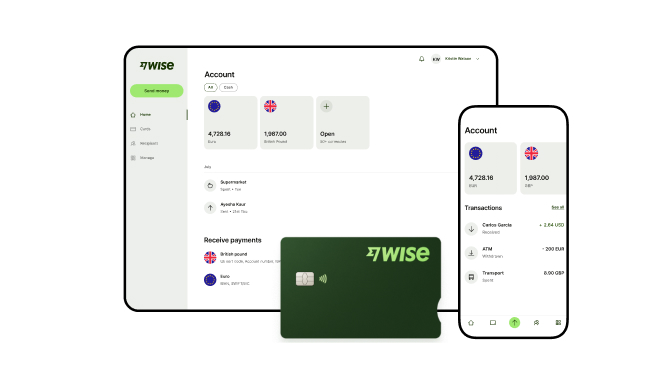
When buying goods or services from overseas you’ll usually pay according to your supplier agreement, using the bank or account information the supplier gives you in their invoice or service agreement.
Singapore businesses may send international business payments through a provider like Wise Business to keep conversion costs down.
In general, the process to send an international payment through Wise Business would look like:
Singapore businesses receiving payments from abroad may do so using account information provided in an invoice, or by embedding a link, payment request or QR code in an email to the buyer.
Here’s an overview of the most common ways to receive business payments through Wise Business:


Wise Business serves as an alternative to traditional business account as you can hold, send, receive and exchange 40+ currencies all in one place. You’ll always get the mid-market rate with low, transparent fees. Even better, you can connect Wise Business cards to your account to control team spending in real time and reduce admin.
Here's what you get with a Wise Business account:
➡️Get started with Wise Business today
** Growth is not guaranteed. Capital at risk.
*Please see terms of use and product availability for your region or visit Wise fees and pricing for the most up to date pricing and fee information.
This publication is provided for general information purposes and does not constitute legal, tax or other professional advice from Wise Payments Limited or its subsidiaries and its affiliates, and it is not intended as a substitute for obtaining advice from a financial advisor or any other professional.
We make no representations, warranties or guarantees, whether expressed or implied, that the content in the publication is accurate, complete or up to date.

Learn how to sell on Amazon Japan as a Singapore business. We cover the setup process, selling fees, FBA, customs and importing, and managing payouts.

The freelance economy is more connected than ever. With the rise of productivity tools, messaging applications and over 800 freelancing platforms like Upwork...

It’s no surprise that Singapore is the home base for some of the world’s most ambitious startups. With a robust talent pool, strong government backing and...

Discover how Osome and Sleek differ in incorporation, accounting, and secretary support services, and which one is a better fit for your Singapore business.

Starting an import and export business in Singapore? Read this guide and take note of key regulations, costs and financial support options.

International businesses can establish a presence in Singapore as a Branch Office or a Subsidiary Company. Here are the differences and what’s best for you.