Family reunification visa in Denmark: Requirements for Americans
Applying for the Family Reunification Visa Denmark? Learn all about the application process, costs, and processing times to reunite with loved ones.


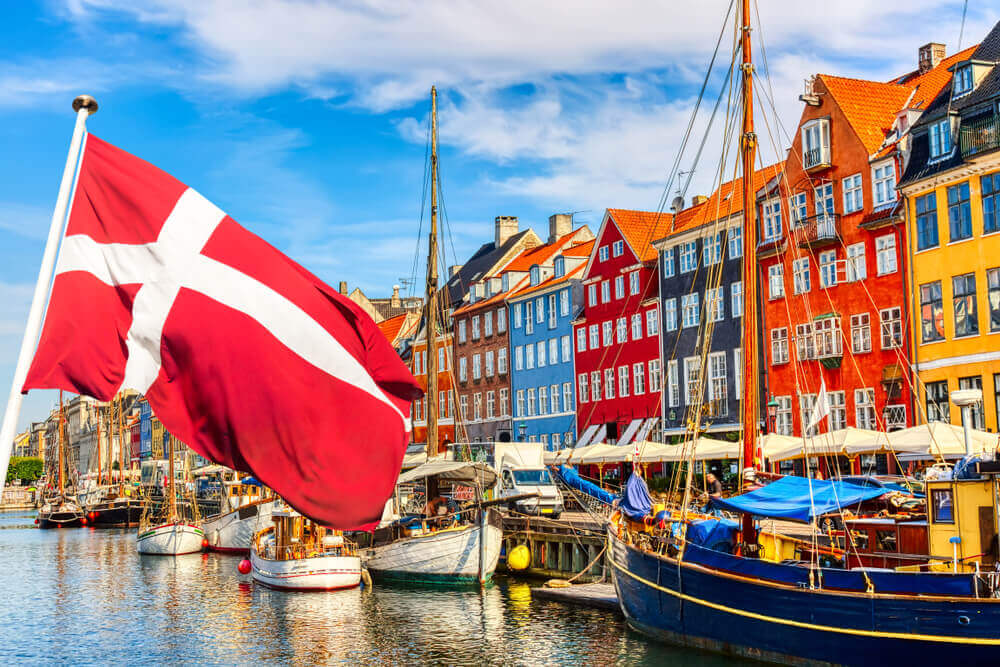
Moving to Denmark isn’t just about buying a plane ticket. This is a relocation guide that will get you started with settling down in Denmark.
For info on visas, bank accounts, health insurance and finding a job, read on.
If you’re also looking for a fast and cheap solution to send money to Denmark from the US or the other way around, open a Wise account today and save on fees – but more on that later.

 * Small initial top-up requirement may apply—it's not a fee. Yours to spend after verification. Learn more.
It can be difficult to get a permanent residency visa in Denmark if you're from outside the EU. To enter Denmark, you'll need a valid passport and as a US national, you can stay in Denmark for 90 days without a visa.
For a longer stay, apply under the residence route that fits your plans, such as work, study or family reunification. Permit duration and work rights depend on the route; there is no universal five-year permit.
Permanent residence is not automatic. The usual residence requirement is eight years, or four if you meet all four supplementary requirements as well as the basic conditions.2 Application fees vary by permit type.
However, the Danish government has many schemes designed to allow expats to move more easily into the country. For example, the Pay Limit Scheme allows expats into the country who expect an annual salary of at least 552,000 DKK in 2026.1
For more info, it’s a good idea to check Life in Denmark, a website dedicated to expats looking for more information about moving to Denmark.
| 💡By handing in your visa application, you’re both applying for a residence and work permit at the same time – check the rights attached to your chosen route. Once eligible to work, arrange tax registration with the Danish tax authorities (SKAT). |
|---|
EU/EEA and Swiss students may need an EU residence document for a longer stay. US students generally need a study residence permit. Admission, identity documents and evidence of financial support may be required; duration and work rights depend on the permit.
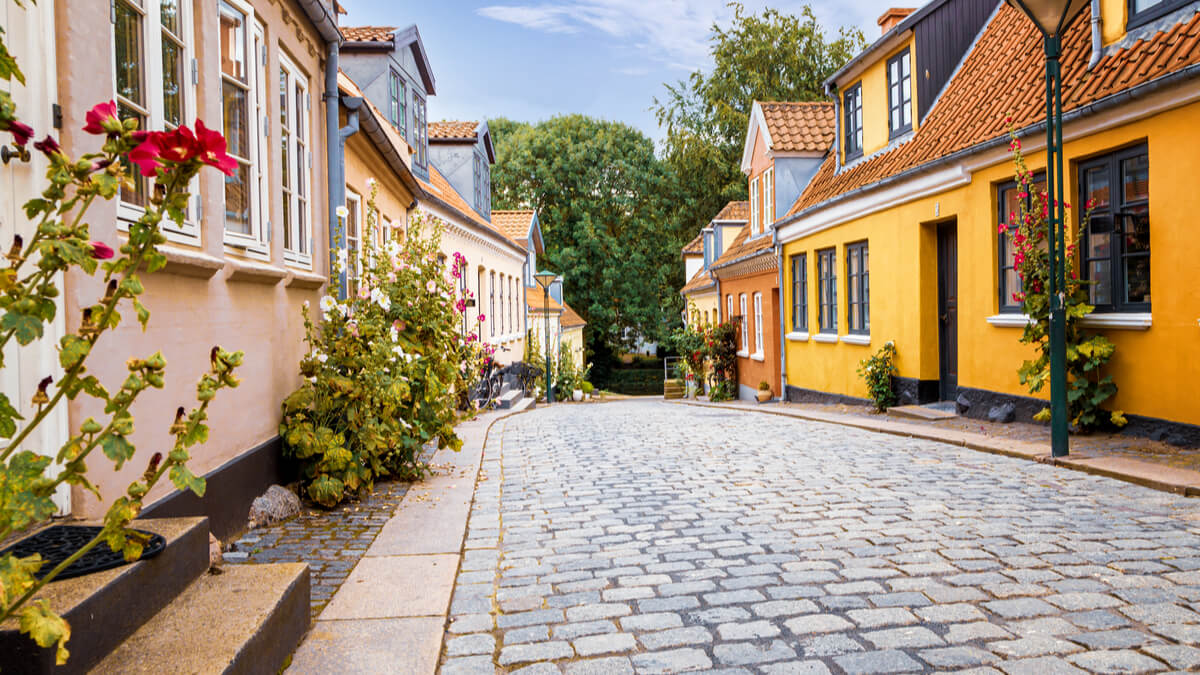
Denmark is an expat hub, which means that opening a bank account as a foreigner is straightforward. Each bank has its own unique policy. To open a standard account, you’ll need your photo ID, proof of address and proof of your employment or student status. Banks commonly ask for a CPR number, obtained through civil registration rather than automatically with a residence permit. If you do not yet have one, ask about the documents accepted for a basic payment account.
If you already have an account with an international bank, they may operate in Denmark. If they do, you should be able to open an account and conduct simple transactions online. You can read more here about how to open a bank account in Denmark.
| 💡Once you’re set up in Denmark, you may want to transfer money into and out of your Danish account from the US. You can save money on foreign currency transactions through Wise. The end result of transactions with banks and exchange companies is often a poor exchange rate and hidden charges. For the mid-market exchange rate, the same one you find on Google, use an alternative provider, like Wise, to move your money. With a Wise Account, you can store and manage money in dozens of currencies such as Danish kroner, which makes bill-paying easy and cost-effective. |
|---|
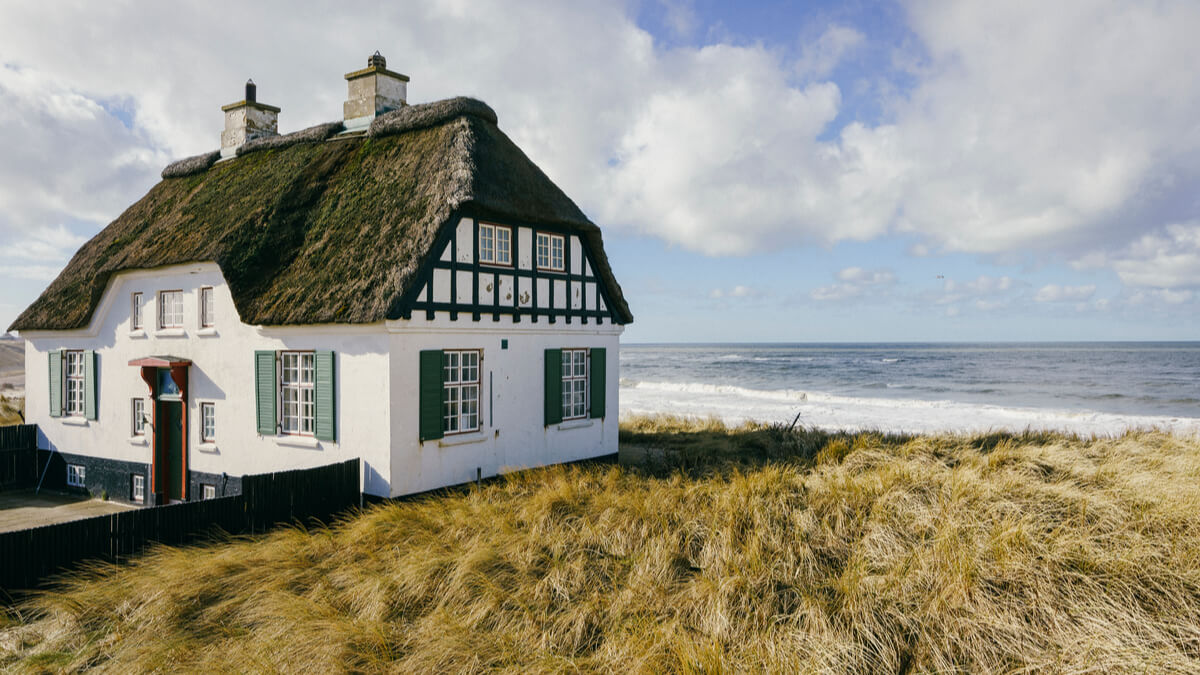
Finding housing in Denmark can be expensive. It’s recommended that you rent before buying a property. The most popular areas to live in Denmark are in its largest cities: Copenhagen, Aarhus, Aalborg or Odense. The north of Copenhagen is more expensive than the south. It’s easier to find housing if you have a residency permit, since many agencies and landlords will request your CPR number.
Apartments for rent are called lejelejlighed. These types of rentals are small and are sought-after in Denmark, because they're the cheapest. Sometimes they have shared communal space. A rækkehus is also a sought-after type of property to rent in Denmark; they're terraced houses that are larger than most apartments and have small private gardens.
Landlords may require up to three months’ rent as a deposit and up to three months’ prepaid rent, plus the first rent payment. Check the lease’s payment and duration terms. Rental agencies can also help expats find a home. You should expect to sign a rental contract between yourself and the landlord.
Budget for the following housing costs. Compare current listings and utility estimates in your chosen city:
| Housing | Approximate costs |
|---|---|
| Rent, per month, one-bedroom outside city centre | Varies by city, size and lease; compare current listings |
| Rent, per month, one-bedroom in city centre | Usually higher in central areas; compare current listings |
| Utilities, per month | Ask which utilities are included and budget for the remainder |
Start your housing search online through the following websites:
Once you've obtained your working visa, language requirements depend on the role. Many jobs require Danish, but English-speaking roles are available, including on the official Workindenmark portal. Being fluent in English won’t guarantee that you’re seen as special, since most Danes are also fluent – though your chances are higher to land an English-speaking job in the bigger cities such as Copenhagen or Aarhus. Engineering, tech and other international workplaces can be useful places to look for English-speaking roles. The more specialized you are in a field, the better.
To get started, here are a few job-search resources in Denmark:
| 💡Compare salaries for your role and experience, then estimate your take-home pay using current Danish tax guidance. Income, deductions, municipality and other factors affect the amount you pay. |
|---|
If you don’t pursue a job in Denmark, studying in Denmark can also be an option, as the quality of education is excellent in the country. Moreover, if you’re a parent, you might be looking for a school for your children.
First, it’s important to note, that schools in Denmark are somewhat different from the schools in the United States.
For example, from the age of 6 to 16, you can freely enroll your child at a folkeskole (people’s school) within your municipality, which should cover the period of compulsory education. This can be a great option as these schools offer free Danish culture and language courses to people newly arriving – no need to worry about the lack of Danish skills.
Moreover, for those aged between 16 and 19, the Danish schooling system offers plenty of options for secondary education as schools can either be vocational or academic-focused.
Besides, there are also private schools and plenty of international schools available in Denmark, especially around Copenhagen. In these schools, the curriculum is usually taught in English. Plus, private schools are relatively cheap in the country as the state provides a subsidy.
Higher education is generally tuition-free for EU/EEA and Swiss students and some other eligible groups. Most US students pay tuition unless they qualify for an exemption or scholarship. The most prestigious universities are located in Copenhagen and Aarhus, but you can find great options in Aalborg and Odense, too.
| 💡 Moving to Denmark? We’ve selected the most important Denmark-related articles for you – check them out! |
|---|
Denmark has some of the highest quality healthcare in the world. Individuals can choose from a range of medical facilities that cover most medical services. Denmark operates through a universal public healthcare system, which means that all citizens have access to it.
Eligibility for public healthcare is based on residence and registration, not simply citizenship or permanent-resident status. People living in Denmark and registered in the Civil Registration System are entitled to public healthcare benefits. Register through the municipality and arrange cover for any gap before eligibility begins.
An EHIC covers medically necessary state healthcare during eligible temporary stays under the local terms. It is not a substitute for residence registration when moving. Some services, such as adult dental care and prescriptions, can involve charges.
To find a doctor, look for the list provided by the National Registration Office. You’ll see doctor’s names and addresses on this list. Most people ask neighbors or friends for a recommendation. You should make an appointment with a GP before you see a specialist. Also, most Danes speak English, so you can safely assume that your doctor is likely to speak English.

If you move under family reunification rules, check the language tests and deadlines in your permit conditions. You’ll want to make sure you brush up on the basics of speaking Danish.
Many people find it easy and accessible to learn Danish online. Duolingo and Babbel are the most popular platforms. You can also use the more personalized platform SpeakDanish.
In person, you can explore courses at higher education institutions and adult learning centres. Programs are often offered by the local council (the kommune) or certain high schools in the region where you live. Additionally, look into private language teachers and classes. Ask your municipality about eligibility for publicly funded Danish courses and any deposit or attendance conditions.
Denmark may be a small country, but there are foreigners moving in and out all the time. If you’d like to stay connected to the expat community, the following websites will get you started:
The following are numbers and departments that you can contact in case of an emergency:
Denmark has a relaxed and enjoyable pace of life. It’s a country which takes great care of its residents and provides a strong work-life balance. A relocation to Denmark requires planning, but is sure to be well worth it.
Sources:
Additional sources checked November 9, 2026:
*Please see terms of use and product availability for your region or visit Wise fees and pricing for the most up to date pricing and fee information.
This publication is provided for general information purposes and does not constitute legal, tax or other professional advice from Wise Payments Limited or its subsidiaries and its affiliates, and it is not intended as a substitute for obtaining advice from a financial advisor or any other professional.
We make no representations, warranties or guarantees, whether expressed or implied, that the content in the publication is accurate, complete or up to date.

Applying for the Family Reunification Visa Denmark? Learn all about the application process, costs, and processing times to reunite with loved ones.
Copenhagen is a world class city, with fantastic culture and a vibrant cosmopolitan outlook. The Danes are famed for having the best work life balance on the...

Between insanely beautiful nature and architecture, one of the highest happiness indexes in the world, incredible workers’ benefits and the unique (and cozy!)...
Greater Copenhagen covers the city of Copenhagen, and surrounding areas of Eastern Denmark and Southern Sweden. It aims to be the global leader in attracting...
Figures from the Danish Immigration Service show that more people than ever are moving to Denmark to live, study and work. They’re drawn by the stunning...